Knee Pain Treatment
What Is Knee Pain?
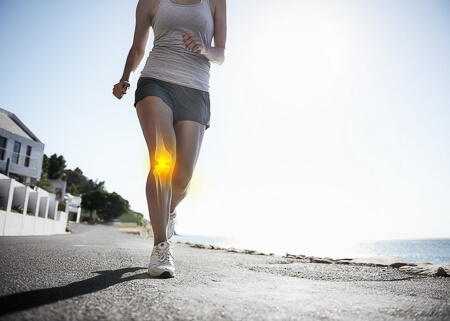 Most people assume knee pain is a knee problem. And while the knee is certainly where the symptoms show up, it is rarely where the story begins.
The knee sits between the hip and the ankle, and its job is to transfer load efficiently between the two. When the joints above or below aren’t moving well — or when muscles in the hip, foot, or core aren’t doing their share of the work — the knee picks up the slack. Over time, that added demand irritates the joint, tendons, ligaments, and surrounding soft tissue. Pain, stiffness, and instability follow.
Common contributors we see include prolonged sitting, limited hip mobility, weak or underused glutes, poor foot mechanics, and sudden spikes in training load. The body is remarkably good at compensating, but the knee is a frequent landing spot when those compensations break down.
At Move Better, we don’t just treat the knee. We ask why the knee is under stress in the first place. When we improve how the hips, ankles, and trunk work together — and how you move through daily life, work, and sport — knee pain often resolves naturally. Lasting relief rarely comes from treating one joint in isolation. It comes from helping the whole system support itself better.
Common Knee Conditions We Treat
Tendon-Related Knee Pain (Patellar or Quadriceps Tendon)
Typically felt as localized discomfort just above or below the kneecap, especially during jumping, running, or quick direction changes. These issues often point to training load errors, reduced strength capacity, or an inability to absorb and transfer force efficiently through the hips and ankles.
Ligament Injuries (ACL, MCL, & LCL)
These ligaments stabilize the knee and control how it moves under load. Injuries often occur with pivoting, sudden impact, or awkward landings and may produce pain, swelling, stiffness, or a sense of instability. Some injuries — particularly complete ACL tears — may require surgical evaluation. Many others are managed conservatively. In either case, recovery depends on far more than the ligament itself. Restoring strength, coordination, and movement control throughout the lower body is what allows patients to return to the activities they care about with confidence.
Patellofemoral (Front of Knee)
Pain Often felt around or behind the kneecap, particularly with stairs, squatting, running, or prolonged sitting. This pattern is frequently linked to how load is distributed through the hip and thigh muscles, limited ankle mobility, and movement habits that place repeated stress on the kneecap over time.
Meniscus Injuries
The meniscus acts as a shock absorber between the thigh and shin. Injuries can occur suddenly with twisting movements, or gradually through repetitive loading. Symptoms often include joint line pain, swelling, stiffness, or a catching sensation. While some meniscus injuries warrant imaging or surgical consultation, many respond very well to movement-based care that restores joint motion, rebuilds strength, and takes unnecessary stress off the knee.
Our Approach
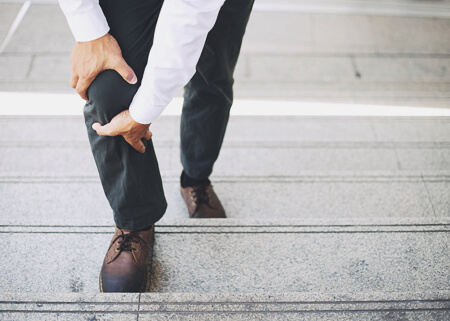 Every knee is different. Every person is different. We don’t put patients in a box, and we don’t treat the knee as though it exists separately from the body it belongs to.
Our evaluation begins with the Movement Paradigm Evaluation, developed and refined in-house, which allows us to observe how you organize and load your body through movement. This gives us meaningful insight into the patterns driving your symptoms — information that a structural diagnosis alone often doesn’t capture. From there, we build a personalized treatment plan that evolves as your body adapts and improves.
Treatment may include movement retraining, chiropractic adjusting, soft tissue work, and targeted strengthening. We also offer Extracorporeal Shockwave Therapy (ESWT) for chronic and acute tissue injuries that need additional support in healing.
We know there are times when our care alone isn’t enough, and we are upfront about that. Our in-house massage therapists and acupuncturists work closely with our chiropractic team to provide coordinated care — particularly valuable for managing inflammation, reducing muscle tension, and supporting tissue recovery. Beyond our clinic, we maintain strong relationships with imaging centers, naturopaths, and other healthcare professionals whose values align with ours. Getting you the right care, from the right people, is always the goal.
Why Address Knee Pain Early
Work With Us
If knee pain is affecting how you move, train, or live, we can help. Our individualized approach looks beyond the symptom to identify the root cause — and gives you the tools to address it for the long term.
Contact us today to schedule a consultation and take the next step toward pain-free movement.
