
Author: Dr. Zach Cullen
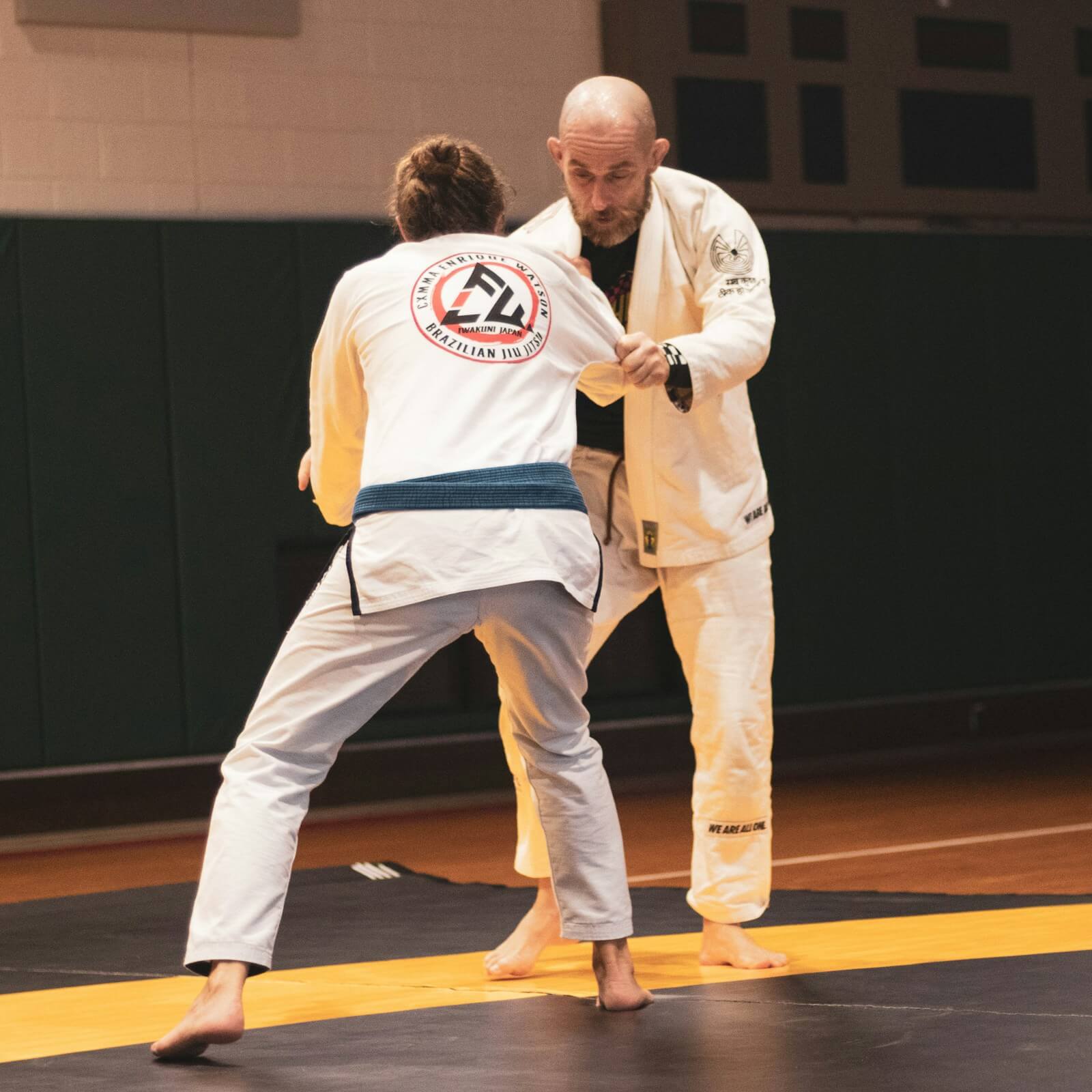 I am proud to say that the start of 2026 marks the entering into my 4th year of training in jiu jitsu. Learning a martial art has been immensely valuable to me for a multitude of reasons. I have cultivated self discipline. I have increased my self confidence. I have obtained a sense of security in having more trust in my capabilities to defend myself as well as loved ones if that situation ever unfortunately manifested itself. I have become part of a community of sweaty weirdos that also find a strange enjoyment in consensual self-inflicted discomfort. I have grown to become a more well rounded athlete.
Many things to be grateful for here.
Most importantly is that practicing a martial art has given me a focus and allowed me to specialize my professional skills towards a specific population of patients.
I am of the opinion that it is very important that when a patient is experiencing pain or discomfort (especially when this injury or pain is associated with a specific sport or activity) that they seek professional care from a provider that can empathize with their position. This mutual understanding is defined by understanding the terminology associated with activity, understanding the positional contexts and biomechanical inferences of the associated activities, understanding the path forward through shared experience of having similar injuries and sport specific pain/dysfunction, and most importantly to understand the mindset of the athlete in front of them.
Jiu jitsu has been immensely positively impactful on my mental health and so when I am in front of a patient that is grappling with the prospect of having to take a prolonged break from training or give it up all together, I truly can understand the emotional magnitude of that situation.
I have personally experienced and heard countless stories from my patients of going to a doctor with a concern of injury or pain to a provider that has no idea what it means to be a martial artist and will recommend something equivalent to “just take 8-12 weeks off” or “If you don’t stop this sport you may be permanently injured”.
Even though I am still relatively new to the art of grappling, I have learned enough in conjunction with my experience as a Chiropractor and Movement Based Medicine specialist to come up with a few nuggets of wisdom I would like to share.
Wisdom nugget #1: Whatever pain you are feeling is probably not as bad as you think
Pain is a peculiar sensation in the body and oftentimes can be very misleading (especially chronic pain). At its core, pain is the brain’s interpretation or opinion of nociceptive signaling that is sent from the local tissue involved, up through the spinal cord, and received in the higher functioning segments of the brain. It is information that your body is sending to the main control center of the body to then create a behavioral modification. Oftentimes (especially in chronic pain cases) the signal that is being sent is inaccurately representing the actual structural state of the local musculoskeletal structures that are “feeling” the pain. This can lead to the individual becoming worried or concerned that something is broken or structurally injured. This is not to say that one should ignore pain but rather to correctly categorize it into the proper severity justified concern. In my experience, 85-90% of grappling associated pain is due to postural dysfunction and overuse associated with the specific muscular demands imposed on the body when interacting with grappling.
Wisdom Nugget #2: Understand what is being worked in the body while grappling and train the opposing muscle groups to maintain muscular balance in the body
As I have stated before, in my experience, 85-90% of pain associated with jiu jitsu that I treat is non serious postural dysfunction or overuse injuries associated with overexposing the body to a chronic pattern of muscular work in the body. Let’s take the grappler’s posture from the standing position. Whether your opponent is standing or seated in bottom guard position, the grappler is incentivized to keep a generally lower position than standing completely up right (outside of short movements of setting up throws and trips with a more judo oriented style of grappling from the feet). The standing grappler also is incentivised to maintain a very closed shrugged posture within their shoulders to defend against underhooks and exposing their neck. This results in a high demand being placed on the upper traps and thoracic spine to maintain scapula revelation and forward thoracic flexion for prolonged periods of time. From this position the standing grappler will also be looking down at the floor unless they use their cervical extensors to arch their neck to keep a forward gaze. This in turn places compressive forces onto the cervical spine. By being in the crouched position from a standing scenario as well as pulling the knees towards the chest in various guards from bottom position (high knee shield, butterfly, half butterfly, and closed guard) a high demand is placed on the hip flexors to pull your own hips and your opponent towards you. These are just some basic examples but the list goes on and on.
With these bodily positions being used heavily in the context of training grappling, I commonly see many patients complain of shoulder pain, upper back pain, neck pain, and lower back pain. Outside of an immediate onset of pain from a sudden unguarded movement or receiving of a joint lock, the remedy to combating this pain (assuming conclusive evaluation has been performed and confirmed this to be the pain generating factors) is fairly straightforward.
- Achieve balanced range of motion, stability, and strength globally through the shoulders, scapulae, and thoracic spine.
- Achieve balanced range of motion, stability, and strength globally through the cervical spine.
- Achieve balanced range of motion, stability, and strength globally through the hips, pelvis, and lumbar spine.
What movements will be performed to achieve this is where specificity to the patient in front of me will dictate and guide decision making to tailor the plan to them.
Wisdom Nugget #3: Joint lock submissions target isolation of a body segment delivering the threat of injury through bringing a joint past its physiological end range of motion
There are a seemingly endless number of submissions to be learned and used to beat your opponent as a grappler. Whether you are performing an arm bar, Americana, kimura, toe hold, knee bar, heel hook, electric chair, wrist lock, calf slicer, or an omoplata, all of these submissions have one thing in common. Secure control of an opponent’s body part and apply progressive force through progressive range of motion to elicit pain, surrender, or in more serious circumstances an actual break to the limb. In the training, most trained partners have established the ability to apply joint locks to their opponent in a way that is safe and give their partner time to tap or surrender before anything is damaged. Regardless of this the risk of injury is still fairly high and is substantially increased when training with a newer grappler who either does not know better or has the power of ego working against them. This makes them a liability to your overall safety when training.
While I could say to simply avoid training partners like this, sometimes you can not be completely sure of the mindset/experience level of a training partner. On top of that weird things inevitably happen when playing this game even with a very experienced and considerate training partner. This risk is exponentially increased when one decides to compete and the stakes are raised to a point where many feel much more justified and hurting their opponent for the sake of winning.
So what can we do to prevent these inevitabilities from taking off of the mats?
My approach to both actively treating joint lock injuries and preventing the severity of their consequences when they do happen is to perform progressive overload resistance training throughout the entire body through very large end ranges of motion.
Let’s take the arm bar for example.
The biomechanical goal of applying an armbar is to create hyperextension of the elbow joint. This will create tensile forces onto the distal bicep tendon, brachioradialis muscle, the anterior articular capsule of the elbow joint, the annular ligaments of the elbow, and potentially the radial/ulnar collateral ligament depending on the angle of force application. Compressive forces are also applied to the posterior elbow nearing the tricep insertions and the olecranon. This leads me to think that it will be a pretty good idea to train my elbow to be able to tolerate the end range of extension under load. To train this I can perform a simple bicep curl variation that emphasizes force application when the elbow is in the most stretched position. Hopefully what this leads to is tissue adaptation that will allow my elbow to become used to receiving force from an end range position and the result of getting caught in an arm bar is not nearly as catastrophic because I am trained to tolerate it.
This same principle can be applied to every joint in the body and there are exercises that correspond to each joint segment accordingly.
To summarize, train your body to become more resilient to tolerate the inevitable physiological demands that will be experienced while training on the mats.
Martial arts is so rewarding and can bring invaluable joy and sense of purpose to an individual’s life. The reality of training martial arts (or any extreme sport for that matter) is that there is a cost of doing business and can significantly increase the risk of injuring oneself if they are not aware of what to do to keep themselves safe. In my opinion, a good place to start is becoming better at appraising what the signals of pain in your body ACTUALLY represent, perform specific supplementary movement to reverse overuse patterns associated with the sport, and apply progressive overload resistance training techniques that reflect the specific demands that will be imposed onto your body while partaking in the sport to better prepare your body to receive and recover from those activities.
Here at Move Better, we understand the mentality of an athlete and are all athletes to some extent ourselves. This will leverage us the ability to better guide your care and keep you doing what you love for as long as possible!