
Foot & Ankle Pain & Injuries Relief
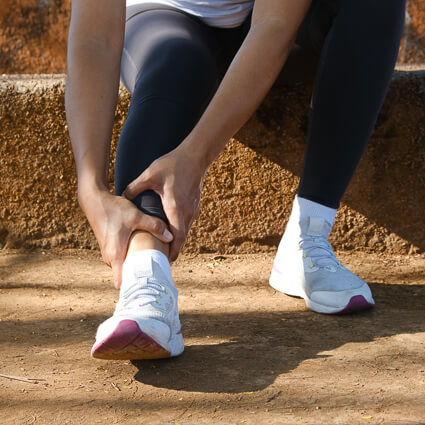
Foot and ankle pain is rarely just a local problem. Pain or dysfunction in this region of the body can alter movement and function throughout the system, which can manifest as further pain or dysfunction up the kinetic chain, including the spine and upper extremities.
Understanding the patient in front of us is the first step in determining why this pain exists, and how we can restore function in the body. Our role as clinicians is to understand the root of the problem that presents itself, and keeping an open mind is a crucial step in this process.
At Move Better, our approach begins with a thorough history inquiring about past injuries, daily activities and hobbies; followed by an evaluation of functional movement patterns. Understanding the goals of each patient is also key. Oftentimes our patients are coming to us after seeing other providers, with little to no relief of their symptoms and no answers or roadmap to resolution. Our responsibility is to not put these cases in a box by establishing or assuming that the pain in the foot or ankle must be caused by an injury or structural damage isolated to the foot or ankle. In the absence of trauma, the answer is likely more complex than that. Keeping an open mind as to what the cause of the presentation of pain is, allows us to look at the whole person, and pick up details and clues that other providers may have overlooked.
Pain rarely exists in isolation, and identifying the root cause allows us to create a treatment plan that goes beyond temporary relief. Thorough assessment and an accurate diagnosis allows us to do so, whether it is an inversion ankle sprain in a young soccer player or a middle aged golfer with heel pain that appeared randomly one morning.
Symptoms of Foot & Ankle Problems
Patients often notice symptoms before they understand the underlying cause. Common signs of foot and ankle dysfunction that we see include:
- Pain in the heel, arch, or ankle
- Swelling, stiffness, or tenderness
- Difficulty walking, running, or balancing
- Numbness or tingling in the foot or toes
- Instability or “rolling” of the ankle
- Chronic pain in other areas of the body; like the low back, hips and/or knees
- Pain with walking, running, lifting weights
Common Foot & Ankle Conditions We Treat
We frequently work with patients experiencing a wide range of foot and ankle issues, including but not limited to:
- Plantar fasciitis and heel pain
- Achilles tendonitis
- Ankle sprains and chronic instability
- Stress fractures of the foot or ankle
- Bunions and toe deformities
- Arthritic changes of the first digit aka ‘big toe’
- Flat feet or fallen arches
- Heel spurs
- Hip weakness or poor hip control affecting foot mechanics
- Limited ankle dorsiflexion
- Nerve-related foot pain, numbness, and/or tingling
How We Evaluate Foot & Ankle Pain
When assessing foot and ankle issues, we consider the entire lower body and its connection to the kinetic chain.
Our evaluation includes:
- Patient history: Previous injuries, daily activity, and movement habits
- Range of motion: Passive/active testing of the toes, feet, ankles, knees, hips, and spine
- Muscle Assessment: Assessment of muscle tone, tenderness, mobility in legs
- Foot loading patterns: Observing static posture, walking and running gait, and functional movements
- Loading mechanics: How and where the foot strikes the ground, whether there’s inversion or eversion collapse, compensation patterns in the rest of the body
- Lifestyle factors: Shoe selection, toe control, and alignment
This comprehensive approach allows us to see how the foot and ankle influence and are influenced by the rest of the body.
Understanding Foot Function: The Tent Concept
To help patients understand how the foot works, we can use the concept of a “tent.”
- Extrinsic muscles = The ropes : These muscles originate in the lower leg and control larger movements like push-off, landing, and ankle motion. They provide power, direction, and stability.
- Intrinsic muscles = The tent floor : These muscles originate and insert within the foot. They provide fine control, arch support, and adaptability, allowing the foot to respond to the ground and maintain balance.
Healthy foot function:
Extrinsic muscles generate force → intrinsic muscles fine-tune and stabilize → arches stay responsive, not rigid or collapsed.
- Overactive extrinsics with underactive intrinsics
- Gripping toes
- Collapsing arches
- Plantar fascia or ankle discomfort
- Limited mobility of the big toe (first digit of the foot)
- Reduced dorsiflexion
- Toes remain long and relaxed
- Arch lifts subtly without curling
- Push-off feels springy and efficient
- Minimal toe grabbing or compensation
- Minimal heel strike during running
- Even force distribution laterally
- Efficient knee and hip position (no valgus or varus positional deformity)
Injuries: When the Past Shapes the Present
Many patients come in with pain in areas seemingly unrelated to the foot or ankle, such as the low back, shoulders, or neck. A thorough assessment often uncovers a previous ankle or foot injury, such as a sprain from years ago that never received proper treatment or rehabilitation. We can see the effects of these injuries in real time, highlighting how impactful these injuries can be on the mechanics of the body over time
Unresolved injuries are more than a historical footnote (pun intended). Treating dysfunctional patterns around a previously injured ankle often improves pain in other areas of the body. This is because the body adapts over time, creating compensation patterns to protect the injured site, which can place stress elsewhere.
Strong, supportive, and stable feet and ankles are crucial for efficient movement. When an injury occurs, the body’s first response is protection, which is a necessary step in healing. But if that protection becomes a long-term pattern without proper intervention, it can limit mobility and function. The body finds new ways to move around the restriction, which can create pain and dysfunction in unexpected areas.
We observe these compensations in real time and educate patients on strategies to restore proper movement. Our hands and feet are primary tools for interacting with the world, and when they are impaired, whether by mechanical, structural, neurological, or external factors we must create a targeted plan to restore pain-free, confident movement within the whole system, not just the parts that hurt.
Treatment & Solutions for Foot & Ankle Pain
Treatment is never one-size-fits-all.
Based on our evaluation, we combine:
- Movement retraining: Restoring efficient foot and ankle mechanics
- Strengthening exercises: Engaging intrinsic and extrinsic foot muscles to improve support and function
- Manual therapy: Soft tissue work, instrument-assisted techniques, and targeted adjustments to reduce restrictions
- Extracorporeal Shockwave Therapy (ESWT): Non-invasive therapy that breaks up scar tissue and promotes healing in chronic conditions like plantar fasciitis and tendon injuries.
- Lifestyle guidance: Footwear recommendations and coaching
In-House Massage Therapy & Acupuncture
To complement our movement-based approach, we offer on-site massage therapy and acupuncture, which are particularly helpful for foot and ankle pain.
These services can:
- Reduce muscle tension in the lower legs, feet, and ankles
- Improve circulation and tissue recovery
- Address chronic tightness or inflammation
- Support overall balance and mobility
Why Address Foot & Ankle Pain Early
The feet are the foundation of movement. Pain or instability in this region can ripple throughout the body, affecting balance, gait, posture, and overall function.
Addressing issues early helps:
- Reduce compensatory movement patterns
- Improve efficiency in walking, running, and daily activities
- Decrease the risk of chronic pain or injury elsewhere
- Restore confidence in movement
- Improve activity performance
Work With Us
If you’re experiencing foot or ankle pain, instability, or discomfort that affects your daily activities, we can help. Our individualized approach targets the root cause of pain and restores long-term function.
Contact us today to schedule a consultation and take the first step toward pain-free movement.
CONTACT US
